


5 common perimenopause symptoms that disrupt your daily life (and what you can actually do about them)

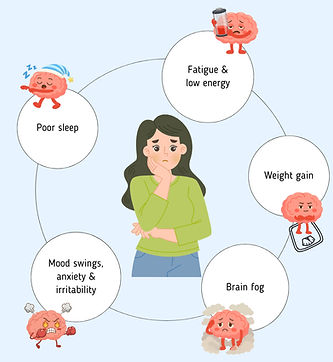
If you’ve been feeling “off” lately, more tired, more irritable, struggling with weight or sleep, you’re not imagining it. And you’re definitely not alone. For many women, these changes start during perimenopause, a phase that can feel confusing, frustrating, and unpredictable. One day you feel fine, the next you’re wondering why your body suddenly feels like it’s working against you.
The good news? Once you understand what’s happening, you can start supporting your body in a way that actually works.
What is perimenopause (and why does it feel so unpredictable)?
Perimenopause is the transition phase leading up to menopause. It can start in your late 30s or 40s and last for several years. During this time, hormones like estrogen and progesterone don’t just decline, they fluctuate. And those fluctuations impact everything from your metabolism and energy levels to your mood and sleep. That’s why things can feel inconsistent. And that’s also why the strategies that used to work for you may not anymore. Your body isn’t broken. It’s just operating in a new environment. Let's check out 5 common perimenopause symptoms that disrupt your daily life.
Note: While symptoms like irregular periods and hot flashes are also very common, many women are most impacted day-to-day by things like fatigue, weight gain, brain fog, mood changes, and sleep issues, which is what we’re focusing on here.
1. Fatigue & low energy
This is one of the most common complaints, and one of the most frustrating. You wake up tired, rely on caffeine to get through the day, and still feel completely drained by the evening.
Why it happens:
Hormonal fluctuations can disrupt sleep quality. Shifting estrogen and progesterone levels can lead to lighter, more fragmented sleep. You may wake up more often, have trouble falling back asleep, or not feel fully rested, even after a full night in bed. As a result you start the day already low on energy.
Your body becomes more sensitive to stress. Estrogen plays a role in regulating your body’s stress response, including how cortisol is released and how quickly your body recovers from stress. As it fluctuates, your body can become more reactive to stress and slower to recover from it. That means the same schedule, workouts, or daily demands can feel more overwhelming than they used to. You burn through energy faster and may feel constantly “on edge” or drained.
Blood sugar dips (especially if you’re skipping meals or under-eating). Long gaps between meals, low protein intake, or relying on quick carbs can lead to spikes and crashes in blood sugar. These dips signal stress in the body and can further increase cortisol levels, resulting in energy crashes, cravings, and that mid-afternoon slump.
What actually helps:
Eat consistently throughout the day (don’t skip meals)
Prioritize protein at each meal to stabilize energy
Incorporate strength training a few times per week (this improves energy over time, not overnight)
Support your sleep with a simple routine and consistent schedule
Reduce your overall stress load (not just push through it)
Simple place to start: Swap a low-protein breakfast (like just toast or coffee) for something with protein: eggs, non-fat Greek yogurt, or a smoothie with protein. It makes a bigger difference than most people expect.
2. Weight gain (especially around the midsection)
If you feel like your body composition has changed, particularly around your stomach, you’re not imagining that either.
Why it happens:
Estrogen changes influence where your body stores fat. As estrogen fluctuates and gradually declines, your body becomes more likely to store fat around the abdomen rather than the hips and thighs. This is a normal physiological shift, but it can feel frustrating when your body starts changing in ways you’re not used to. Even if your weight hasn’t changed much, your body composition and where you carry weight may look different.
Muscle mass naturally declines with age (and muscle is key for metabolism). Starting in your 30s and 40s, your body gradually loses muscle if you’re not actively working to maintain it. Since muscle is metabolically active (it burns more energy at rest), losing it can slow down your metabolism over time. As a result your body may require fewer calories than before, and it becomes easier to gain weight, even if your habits haven’t changed much.
Extreme dieting can slow your metabolism even further. When you significantly cut calories or constantly diet, your body adapts by conserving energy. This can lead to a slower metabolism, increased hunger, and reduced energy levels. Weight loss becomes harder to sustain, and you may feel stuck in a cycle of dieting and regaining.
What actually helps:
Strength training (this is the most important piece)
Eating enough protein to support muscle
Avoiding the “eat less, do more cardio” trap
Reframe your thinking: This isn’t about eating less, it’s about supporting your metabolism so your body can function better.
3. Brain fog
Forgetting why you walked into a room. Losing your train of thought mid-sentence. Struggling to focus. It’s frustrating, and sometimes a little scary.
Why it happens:
Hormonal changes can impact cognitive function, but brain fog is also heavily influenced by sleep, stress, and energy levels. During perimenopause, fluctuating estrogen levels can affect areas of the brain involved in memory, focus, and mental clarity. Estrogen also plays a role in supporting neurotransmitters that help you think clearly and stay sharp.
At the same time, brain fog is rarely caused by hormones alone. It’s often compounded by:
Poor or disrupted sleep, which affects memory and concentration
Higher stress levels, which can make it harder to focus and process information
Low or inconsistent energy, especially when you’re under-fueled or experiencing blood sugar dips
You may find yourself forgetting things more easily, struggling to concentrate, or feeling mentally “slower” than usual.
What actually helps:
Improving sleep consistency (even small improvements matter)
Eating regularly to support steady energy levels
Daily movement, especially walking, to support both brain function and stress reduction
Reducing mental overload where possible (fewer tabs open - literally and figuratively)
Simple place to start: A 10–15 minute walk each day can improve both mental clarity and stress levels more than you’d expect.
4. Mood swings, anxiety & irritability
If you’ve felt more on edge lately, quicker to snap, or more anxious than usual, it’s not just in your head.
Why it happens:
Hormones influence neurotransmitters that regulate mood, and your stress response becomes more sensitive during this phase. During perimenopause, fluctuations in estrogen can impact key brain chemicals like serotonin and dopamine, both of which play a role in mood, motivation, and emotional stability. When these levels are less stable, your mood can feel less stable too.
At the same time, estrogen also interacts with your body’s stress-response system (cortisol). As it fluctuates, your body can become more reactive to stress and slower to calm back down. You may feel more irritable, anxious, overwhelmed, or emotionally reactive than usual, even in situations that didn’t used to bother you.
What actually helps:
Regular movement (especially strength training)
Eating regularly to avoid blood sugar crashes
Creating small pockets of recovery in your day
Important reminder: This isn’t a personal failing or lack of patience, your body is under a different kind of stress load right now.
5. Poor sleep
You may have trouble falling asleep, staying asleep, or waking up feeling rested.
Why it happens:
Hormonal fluctuations, specifically changes in estrogen and progesterone, can interfere with your natural sleep cycle. Progesterone, in particular, has a calming effect, so when it drops, it can be harder to relax and stay asleep.
Night sweats or temperature changes. Fluctuating estrogen can affect your body’s temperature regulation, leading to night sweats or feeling too hot during the night. This can result in frequent wake-ups and disrupted sleep.
Increased stress and a more reactive nervous system. As your body becomes more sensitive to stress, it can be harder to “shut off” at night. You may feel tired but wired - physically exhausted, but mentally alert.
What actually helps:
Consistent sleep and wake times
A simple wind-down routine before bed
Limit screens and stimulation before bed
Avoiding intense workouts too late at night
Keep your bedroom cool and comfortable
Simple place to start: Instead of scrolling until you fall asleep, give yourself 10–15 minutes to unwind. Read, stretch, or just sit quietly.
Where most women get stuck
The biggest mistake I see is trying to fix everything at once. Cutting calories, adding more workouts, trying to overhaul sleep, manage stress, and stay consistent - all at the same time. It’s overwhelming. And it’s not sustainable.
What actually works
The women who feel better during perimenopause aren’t doing everything perfectly. They’re doing a few key things consistently:
Strength train a few times per week using weights that feel challenging to help build and maintain muscle. Over time, gradually increase the challenge so muscles continue to get stronger. This can be done by lifting slightly heavier weights, doing more reps, adding an extra set, or slowing down the movement for more control.
Eating in a way that supports energy (not restricts it). Prioritizing clean proteins (e.g., grass-fed meats, pasture-raised poultry, wild-caught fish, organic eggs, lentils, and beans), gluten-free grains (e.g., buckwheat, quinoa, and brown rice), healthy fats (e.g., avocados, nuts and seeds, and olive oil), organic fruits and vegetables (e.g., berries, apples, cherries, grapefruit, beets, broccoli, cauliflower, and dark leafy greens), resistant starches (e.g., potatoes, oats, squash, and sweet potatoes), and sea vegetables (e.g., dulse, nori, and seaweed salad).
Building routines that fit their life. Prioritizing a consistent sleep schedule, setting boundaries to reduce stress and overwhelm, and moving consistently throughout the day.
Final thoughts
If you’re experiencing these symptoms, it doesn’t mean your body is failing you. It means it needs a different kind of support. And when you start giving it that support, even in small ways, you can begin to feel stronger, more energized, and more like yourself again.
Ready for support? If you’re not sure where to start, book a Be Well Discovery Session. We’ll create a plan that actually fits your life, and works with your body, not against it.
Until next time...Eat Well. Live Well. Be Well.
Dianna



Comments